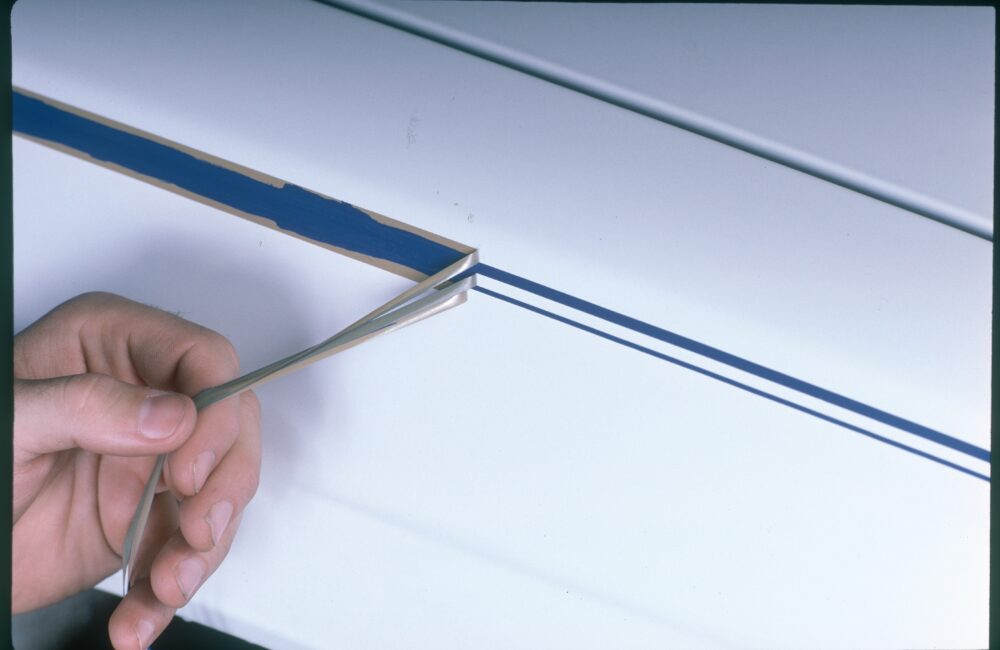
Selecting the best automotive pinstriping stencil tape will affect the appearance and the longevity of a custom-designed finish. If you’re asking, How to choose the best pinstripe tape for cars? Start by looking at the paint of your vehicle and body contours, the desired style, the width of the tape and adhesive quality, as well as exposure to outside conditions. The best product will create an uncluttered visual line that is in harmony with the existing style of the vehicle. Finesse Pinstriping has a whole line of The STRIPER series stencils for pinstriping in our shop.
Pinstriping in the automotive industry involves more than just placing the tape strip along a wall. Professional outcomes require careful selection of materials and precise positioning, as well as surface preparation and application. Knowing these aspects will allow vehicle owners to make an informed decision.
Consider the Vehicle’s Paint and Surface
The location on which pinstripe tape is applied is among the most important factors to consider. Automotive tape typically performs best when applied to clean, smooth, and fully cured paint surfaces. The presence of dust, wax, silicone residues, and other substances can cause problems with adhesion.
Prior to applying the tape, the surface must be cleaned thoroughly and dried. Paint that is in use should remain stable and not suffer from any significant peeling or the oxidation process. The application of tape on damaged paint may cause adhesion issues and could cause future removal to be more difficult.
Different vehicles have various body styles. Classic cars, trucks, motorcycles, SUVs, and modern passenger vehicles require different methods of transportation because their contours and panels differ significantly.
Choose the Right Tape Width
The width of the tape has an immediate influence on the appearance of the pinstripe. A narrow tape can provide an ethereal accent, while a more expansive tape could create an aesthetically pleasing custom look. Some designs may also utilize multiple widths to create stripes that are layered.
When choosing a width, think about the size of your vehicle as well as the location that the line will run. A proportionate design generally looks more balanced than choosing the biggest or widest tape that is available.
For instance, a small stripe might work in a vehicle’s character lines, and a more expansive design might be more suitable for a bigger truck or customized panel. The test of the proposed layout with temporary markings can help you determine the correct visual location prior to applying it permanently.
Match the Color and Finish to the Vehicle
Color selection should be in harmony with the paint, not make it appear more dominant. Silver, black, white, red, gold, and metallic finishes can produce distinct visual effects based on the base color of the vehicle.
Glossy finishes usually give a more attractive appearance to modern cars, while contrasting or metallic colors may be suitable for traditional and custom-built models. The trim around it should be a consideration too, as the stripe that matches badges, wheels, or other details on the exterior will create a more unified appearance.
It is beneficial to examine the color of samples in sunlight before making a final choice. The lighting can dramatically alter the way metallic and reflective materials appear.
Check Flexibility and Adhesive Quality
The pinstriping tape should follow the contours of the vehicle, without causing unbalanced edges or wrinkles. It is crucial to be flexible when working on the curvature of doors, fenders, and bumpers, as well as other similar-shaped panels.
The performance of adhesives is also important. These tapes are made to be used in vehicle applications and must be selected in accordance with the purpose of the manufacturer. However, even the best tapes can be damaged if applied to a damaged surface or in unsuitable conditions.
Be careful not to stretch the material too much during the installation. The tension may affect alignment and could cause shrinkage or lifting following application.
Think About Weather and Daily Use
The environmental conditions of a vehicle may affect the performance of pinstriping in the long run. Exposure to rain, sunlight washing, temperature fluctuations, and road contaminants can slowly alter the exterior of materials.
If your vehicle spends a lot of time outdoors, you should consider using tape that is specifically designed for outdoor automotive use. Weather resistance and UV can be beneficial, but they should not be considered as a guarantee of an exact service lifespan.
A proper washing routine can aid in preserving the surface. Cleaning methods that are aggressive within the stripe can increase the likelihood of lifting off the edge, especially when the finish is already beginning to degrade.
Follow Professional Application Practices
A successful pinstripe relies on the preparation of the stripe and its accuracy. Professionals typically determine the stripe path prior to application and utilize the body lines of the vehicle as guides for visuals.
Our services include expert auto, automotive pinstriping, and pinstriping tape services. We pay an eye to alignment surfaces, surface condition, material selection, and other particulars. These elements can have a major impact on the creation of personalized automotive designs.
The experience of the application also assists in tackling difficult areas like panels, curves and corners, door edges and transitions. The aim is to keep the same spacing and uniform appearance instead of forcing the tape along an inconvenient direction.
Make a Practical Choice for Your Vehicle
The best pinstripe for cars is not always the biggest one, the most expensive, or the most vibrant alternative. The best choice is contingent on the way in which the material interacts with the paint of the vehicle form, shape, and style, as well as the intended usage and the surroundings.
When you’re thinking about how to choose the best pinstripe tape for cars?, focus on quality construction for automotive use, the suitable dimensions of the stripe, its flexibility, the color finish, and the correct installation. For custom-designed automotive pinstriping as well as expert guidance on the material, Finesse Pinstriping is a great option to help owners design their own custom designs by paying close attention to the fit, the style, the design, and the longevity.
Frequently Asked Questions
1. What should I be looking for when selecting pinstripe tape for automotive use?
Find a high-quality automotive tape that has appropriate flexibility, strong adhesive, ultraviolet resistance, and weatherproofing. The tape’s width, color, and finish must match the paint of the vehicle or body line.
2. What size of pinstripe tape is the most suitable for cars?
The right width will depend on the car’s dimensions, body style, and style. A tape that is narrower can provide subtle contrast, whereas the wider tape will give you an enticing custom appearance.
3. Is Vinyl pinstripe tape suitable for use on cars?
Yes. Automotive vinyl pinstripe tape can often be used to detail exterior vehicles due to its flexibility and clear lines. Make sure that the product is designed for use in automotive applications.
4. How can I get pinstripe tape to stick in a proper way to a vehicle?
Begin by preparing an unclean, dry, smooth, and dry surface free of dust, grease, wax, and the silicone traces. Apply the tape with care, avoiding excessive stretching, and adhere to the application guidelines of the manufacturer.
5. How long will auto pinstripe tape be used?
The duration of its lifespan is dependent on the quality of the product, the surface, the preparation of the surface, the sun, the weather, and the washing, as well as the installation. Automotive tape that is rated for exterior use can offer greater durability when it is properly chosen and installed, as well as maintained.