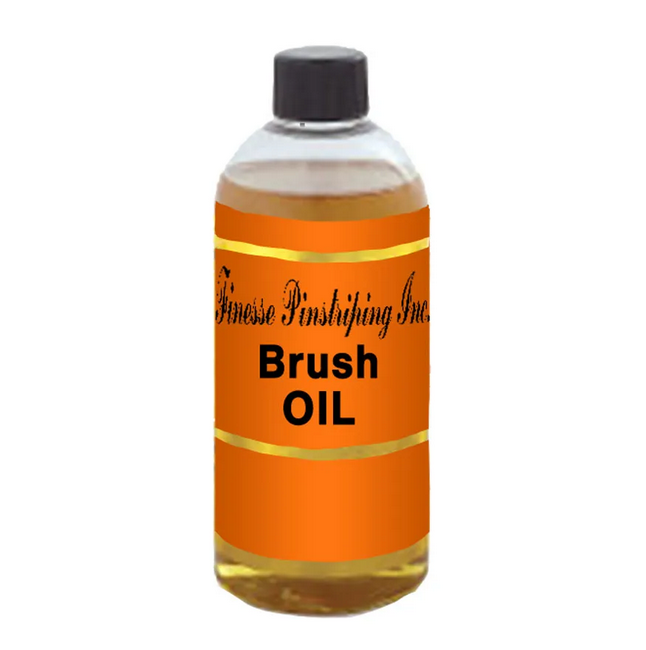
If you’ve ever wondered What is the best pinstriping brush oil for professional use? is, then you’re not the only one. It is among the most important and often neglected questions in the auto customizing industry. The correct brush oil isn’t just a product for maintenance; it’s the difference between a tool that is able to perform flawlessly for a long time and one that fails after a couple of jobs. No matter if you’re an experienced pinstriper or an expert shop that wants to keep the highest standards of workmanship, knowing the right choice of brush oil is crucial to creating smooth, uniform lines on each vehicle.
Why Brush Oil Matters More Than Most Professionals Realize
Pinstriping brushes, particularly made of natural squirrel hair such as those of the Mack Series 10 or Kafka sword brushes, are tools that can be used with precision. The bristles are delicate and require conditioning in order to maintain their shape, flexibility and capacity to hold paint. Without adequate oiling, bristles become dry, they splay unbalanced and lose the taper which allows fine-line work.
Professional automotive pinstripers apply oil at two crucial points prior to use, to prepare the bristles and regulate the flow of paint, and following cleaning, to keep brushes in safe and well-shaped state. By skipping one of these steps, you reduce the life of even top-quality brushes. In a shop that is professional, where brushes are both a source of investment as well as an instrument for production, ignoring this stage isn’t an alternative.
Understanding the Types of Brush Oil Available
There are many different brush oils available. Not all are all created equal, so using the wrong one could cause damage to your tools in the long run. We explore the fascinating world of the mind breaking down psychology concepts into simple is a list of the most commonly used options for professional automotive pinstriping.
Refined lard oil has been for a long time, the standard for experienced pinstripers. The reason for this is its stability over time. Refined lard oil will not get dry, turn rancid, or form crystals in bristles, which is an issue that is common when using plant-based alternatives. Professionals who store their brushes for long periods of time between contract periods often depend in this kind of oil. Brushes that have been treated with refined lard oils have been found to be in good operating condition after over 10 years of storage, which makes it a popular choice in large-scale shops that have periodic projects.
Commercial brush Preserving oils like the Kustom Shop’s KB211 or Custom Shop Brush Preserving Oil, specially designed for use with pinstriping and lettering brushes. These oils restore natural oils to hair, prevent the buildup of paint on the tip of the brush and help keep bristles soft throughout the use. If you work in shops that deal with vehicles every day, a commercial preserving oil is an efficient and consistent solution that is simple to apply and simple to rinse off before the next brushing session.
Neatsfoot oil is sometimes used for field use; the majority of experienced professionals advise against it for long-term storage. Although it can condition bristles in the short-term, certain pinstripers have mentioned that it attracts insects in time, an issue that is particularly relevant when the brushes are kept in workshops or service vehicles for extended periods of time.
Avoid cooking oils, as well as non-refined vegetable oils in total. They may appear to be affordable alternatives; however, they leave remnants, turn rancid and damage hair’s delicate structure, which is what makes professional pinstriping brushes so efficient.
How to Apply Brush Oil the Right Way
The technique of application is just as important as the product choice. After thoroughly cleaning a brush using the appropriate solvent or brush cleaner, and leaving it to completely dry apply a tiny amount of oil, usually just a few drops, applying it slowly, starting from the ferrule and working it down to the end. Make the bristles’ shape carefully with your hands before storing the brush in a flat position or hanging it upside-down to preserve its natural shape.
When you are ready for your next project, take the time to wipe off the excess oil using an unclean cloth and check your brush with a test panel. Any remaining oil within the bristles could impact the flow and adhesion of paint, particularly when working with 1 Shot enamels or urethane-based pinstriping paints. Professionals with experience develop a sense of the amount of oil sufficient to condition the bristles without damaging the load of paint.
Matching Brush Oil to Your Working Environment
The climate plays a significant and decisive impact on decisions regarding the maintenance of the brush. In coastal areas with high humidity, bristles are more likely to hold water naturally and could require less frequent conditioning oils. In arid or air-conditioned workplaces, brushes lose moisture more quickly and can benefit from regular oiling during the course of a job. Professional shops located in warmer Southern regions typically go through more brush oil because of the effects of the heat and environmental evaporation.
The type of paint is also important. Paints that are based on enamel respond differently to brushes that have been oiled than products based on water do. Making sure your brush is completely cleansed of any residues of paint prior to oiling will prevent cross-contamination between colors and preserves sharp, consistent line quality on all vehicles.
Conclusion
Being aware of What is the best pinstriping brush oil for professional use?for professional use is ultimately about selecting the right product for your particular process, storage needs and work conditions. The refined lard oil is the most durable option for long-term use and commercial oils can be used in busy shops with regular production requirements. The decision you make affects the quality of each line you pull as well as the durability of every brush you have in your collection. In Finesse Pinstriping in Naples, Florida, brush treatment is considered an essential aspect of a professional’s craft as safeguarding your tools is the way you can ensure the integrity of your work for every vehicle that walks through your doors.
Frequently Asked Questions
Q. What’s the most effective pinstriping brush oil to use for professional use?
A. Lard oil, refined and commercially produced, preserving oils such as Kustom Shop’s KB211 are excellent options. They nourish bristles, stop dryness, and increase the length of brush life, without leaving harmful residues on the hair.
Q. How often should I be oiling my pinstriping brush?
A. Lubricate your brushes after each cleaning session and before long-term storage. For brushes that are used daily, gentle conditioning following every job will keep bristles soft, formed, smooth and ready for precision line work.
Q. What is the best way to use cooking oil, whether regular or engine oil on my pinstriping brush?
A. No. Cooking and engine oils turn rancid, leave a residue and cause breakage of delicate hairs on brushes with time. Always apply refined lard oil, or a preserving oil for brushes specially designed for striping and lettering brushes.
Q. What does the effects of brush oil influence the performance of pinstriping paint?
Excessive oil that remains in bristles may cause disruption to the flow of paint and hinder adhesion. Be sure to clean off any oil residue prior to loading paint, and examine the brush on a test panel to ensure a clean, constant line quality.
Q. Does the climate impact the way I maintain my pinstriping brush?
A. Yes. The humid environment requires less frequent oiling, whereas dry or air-conditioned stores require regular air cooling. Make sure you match your routine for brushing oil to the local climate to get optimal results.