
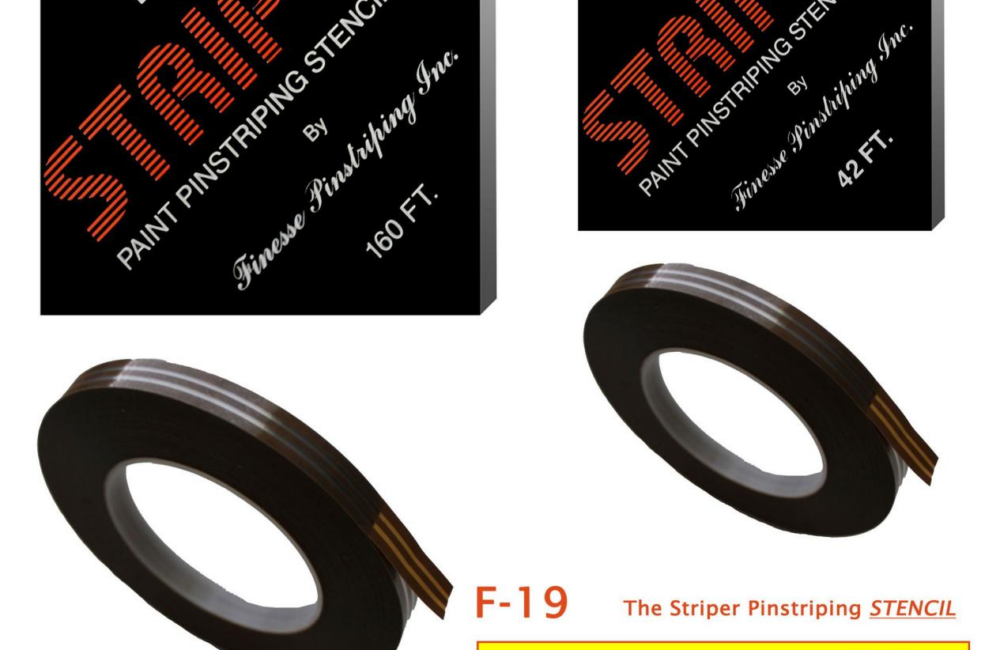
Making the best choice in products is crucial to ensuring clear, sharp and durable pinstripe lines this is the reason professionals look over the various materials for the pinstriping tape supplies for sale rather than just picking the most affordable roll from the shelves. The best tape should be compatible with the paint system. It should smoothly contour over curves, keep from lifting when coated with clear and retain edge quality even during bake cycles at high temperatures. Once you know the basics of tape construction and adhesives, the types of tapes sizes, widths, and the requirements for surface preparation You can drastically reduce the need for rework, and get consistently sharp result.
Professional pinstriping tape for professional use is far more than simply the color of the vinyl that is on the roll. The majority of industrial and automotive-grade striping tapes consist of elastic PVC, urethane or the fine line masking substances like thermally stable vinyl and polyester. They are designed to stretch only enough to allow for complicated curves, while maintaining an even length and sharp edges. In particular Fine line tapes utilized to create custom graphics typically endure temperatures as high as 130 to 150 degrees Celsius during baking. They they are not designed to cause adhesive residue if taken off correctly. Knowing these properties can help to match the tape with the workflow you are using, particularly in the case of multi-stage basescoat/clearcoat systems, or heated booths to spray.
Technology for adhesives is an additional aspect to consider when looking at the various pinstriping tape supplies for sale. Professional tapes generally use pressure sensitive adhesives specifically designed to be used for automotive refinishing as well as highly-energy surfaces like OEM clear coats, metal panels, and sanded properly primers. Pinstriping tapes that are of good quality should provide a strong initial tack, so that it is able to remain in place during design, and yet let go without tears or leaving a residue after the coating cures. Modern tapes are also equipped with solvent-resistant adhesives that retain their bonding strength even when exposed to reducers, thinners as well as clear coats. For those working with plastic fairings, composite fairings or surfaces that require low energy it is important to test adhesion prior to selecting an adhesive that is specifically designed to work on these types of materials.
The width of the tape and its edge are key to the visual effects. Pinstriping widths typically range from 1/16 inches (about 1.6 millimeters) to create delicate accent lines, to half an inch (about 12 millimeters) or even more for striking graphic elements. Most professional tapes are offered in multi-stripe formats, which means that the same strip contains two or more lines that are separated by a gap fixed. This speeds up the layout process and allows for a perfect, even spacing that is hard to determine by using your eyes. Quality of the edge is also essential: high-quality tapes are made to precise tolerances, ensuring that the edges are completely straight and free of painting creepage and feathering. This is especially evident when applying contrast colors or metallics which highlight small flaws.
Conditions of the surface and its environment influence how well any particular tape can perform. The best products can not perform well if they are applied to silicon, wax, or on dusty surfaces. Prior to applying the tape, experts usually clean their surfaces with an appropriate wax and grease remover. Lightly scuff it using an abrasive pad of fine size (such as 800-1000 grit, or similar scuff pads) when paint is going to be applied after which they clean using a cloth that is lint free. It is important to consider temperature: the majority of companies recommend using tape under moderate temperatures, typically between 18 and 25 degrees Celsius, so that the glue flows smoothly into small surface imperfections. In extreme hot or cold environments could cause poor adhesion edges lifting, or distortion lines.
The compatibility with your paint system and work flow should be the guiding factor in the final decision. If you are frequently spraying waterborne basecoats, it is possible to choose the fine line tapes which resist water absorption, and also maintain edge strength through multiple wet-on runs. In the case of solvent-based enamels or urethanes an adhesive and backing that is solvent-resistant is essential to ensure that the tape doesn’t shrink, wrinkle or leak at the edges. In the event that you cook your finish be sure to make sure you know the maximum temperature and duration of stay to prevent back shrinkage or adhesive transfer that may alter the appearance. The study of technical datasheets, if there are any, is a great method of confirming these requirements instead of just relying on the marketing description.
In the end, longevity and removal is a matter of how long the striping lasts or permanent. If the pinstripes are painted and secured under a clear coat, the stripe can only be a temporary masking tool. Therefore, it is essential to remove the tape cleanly. If self-adhesive stripes remain on the vehicle durability, UV resistance, and the long-term durability of adhesion become important performance indicators. If you are testing either of these, a portion of the tape within a small area helps you know that the stripe is working as intended on that particular finish and substrate. If you conduct proper tests and pay close care to the finer points of technology Your choice of pinstriping tape supplies for sale will result in more attractive designs, less repairs, and superior outcomes on each job.
FAQs about Our Professional Pinstriping Support Services
1. Do you help professionals select the right pinstriping tape for specific projects?
Yes, we provide guidance on choosing tape based on surface type, paint system, temperature conditions, and design complexity so your pinstriping work is both durable and precise.
2. Can you advise on pinstriping techniques for complex curves and multi-color designs?
We offer practical tips on laying out curves, layering colors, and timing tape removal, helping you reduce paint bleed and keep line edges razor sharp.
3. Do you provide information on surface preparation and paint compatibility?
Absolutely, we explain best practices for cleaning, sanding, and priming, as well as how to match tapes with waterborne or solvent-based paints and clear coats.
4. Can beginners get support to start doing professional-level pinstriping?
Yes, we help newcomers understand tape types, basic layout methods, and common mistakes to avoid, so they can build confidence and achieve cleaner results from the start.
5. Do you offer ongoing advice for troubleshooting pinstriping issues?
We can help you diagnose problems like edge lift, paint bleed, or adhesive residue and suggest adjustments in tape choice, application technique, or curing process to improve future jobs.

